
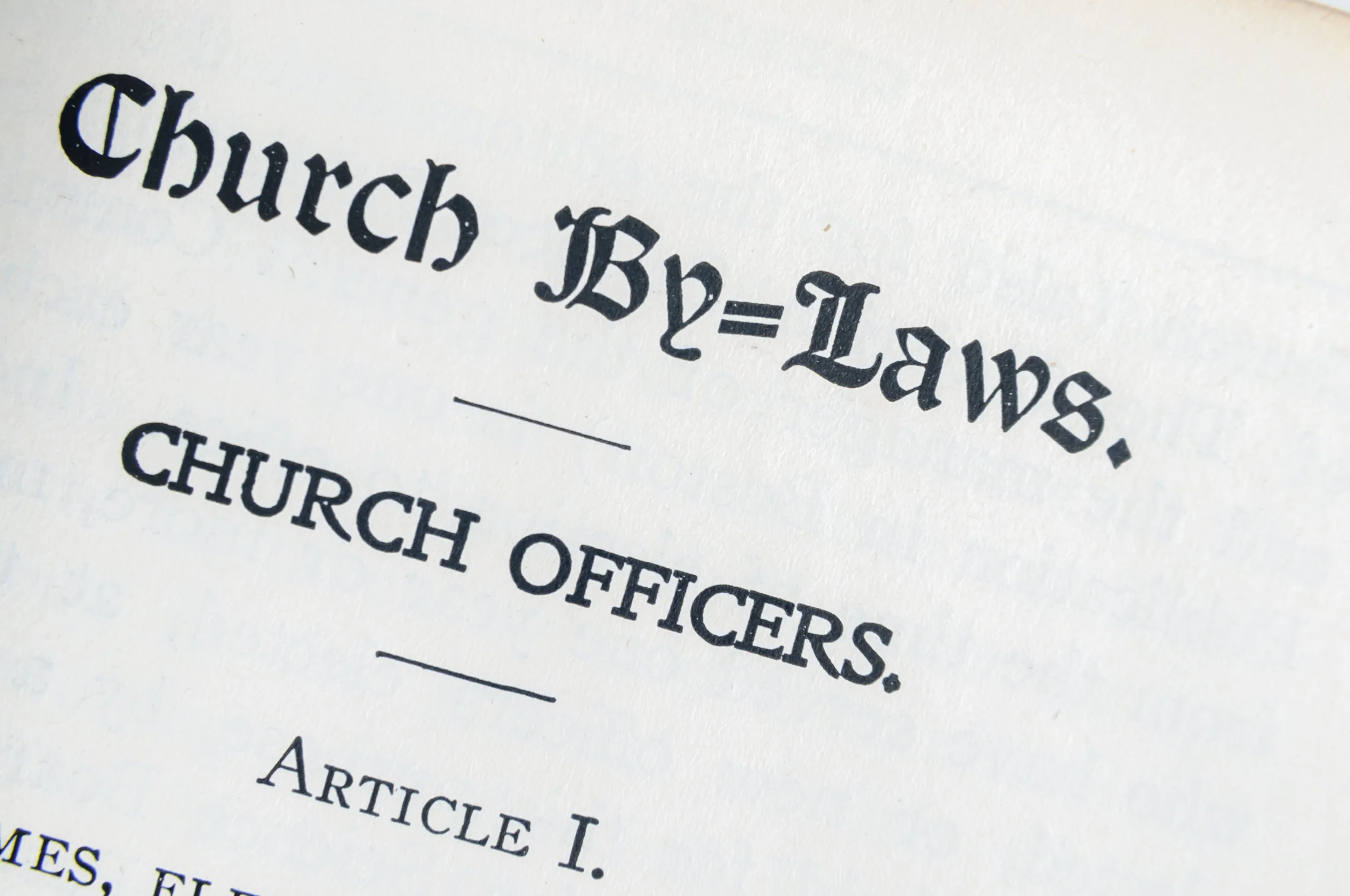
A strong church begins with a strong legal foundation. Yet, one of the most common issues we encounter when partnering with churches is that the legal structure established years ago has never been revisited. The church has grown, ministries have expanded, property has been acquired, and leadership has changed—but the corporate framework has remained the same.
Many church leaders assume that because their church is incorporated and has tax-exempt status, everything is in order. In reality, corporate formation is far more than simply having Articles of Incorporation on file with the Secretary of State. Your corporate structure serves as the legal framework that protects the church itself, protects your pastors and church leaders, protects your board members and officers, as well as your church assets and property. Even more importantly, your formation remaining updated and strong is vital to protecting your ministry’s long-term mission.
When properly maintained, that framework preserves corporate protections, strengthens governance, and allows leadership to make decisions with confidence. However, few churches look the same today as they did five or ten years ago.
Perhaps your church has added a preschool or private school, started a counseling ministry, purchased additional property, launched multiple campuses, created a nonprofit ministry under the church, expanded internationally, or added new revenue-generating activities. Each of these milestones can have significant legal implications.
Churches that are pursuing the Great Commissioning all have one thing in common – they typically grow, multiply, expand, and never look back as God blesses their obedience. Unfortunately, many churches continue operating under organizational structures that were designed for a much smaller ministry. What once worked well may now expose the church to unnecessary liability, governance challenges, or compliance issues.
Our Corporate Formation Review is designed to determine whether your ministry remains properly formed, legally compliant, and strategically structured for where God is leading your church. During this process, we carefully evaluate your:
Articles of Incorporation
Bylaws and governing documents
State corporate filings
Corporate record books
Affiliated ministries and related entities
Registrations and compliance requirements
Organizational structure
Governance practices
Our goal is not simply to identify problems. We want to determine whether your current legal structure continues to support your church’s vision, leadership model, and future growth.
Many law firms focus exclusively on legal compliance. We certainly care about compliance—but our objective goes much further. We ask strategic questions such as:
Is the church structured to support future expansion?
Are affiliated ministries organized appropriately?
Is liability properly compartmentalized?
Are leadership roles clearly defined?
Does the governance structure facilitate healthy decision-making?
Will this structure still serve the ministry five years from now?
Legal documents should not simply satisfy legal requirements; they should actively support ministry effectiveness. Strong corporate governance does more than reduce legal exposure. It creates clarity for leadership, protects the church during seasons of transition, strengthens accountability, and positions the ministry to pursue new opportunities with confidence.
Whether your church is preparing to launch a new campus, purchase property, establish a nonprofit ministry, or simply ensure everything is in good order, a proactive review of your corporate foundation is one of the wisest investments you can make.
At Gideon Law Group, we believe churches deserve more than transactional legal services. We serve as long-term legal counsel, partnering with pastors and church leaders through every stage of ministry growth. Our Corporate Formation Review is the first step in our 12-Month Church Legal Roadmap because every healthy ministry is built upon a solid legal foundation.
When your legal structure is aligned with your mission, your leadership can spend less time worrying about organizational risk and more time focusing on what matters most —advancing the Gospel and faithfully serving the people God has entrusted to your care.